
Why the famous “salmon DNA” brand isn’t your only option – or even your best one
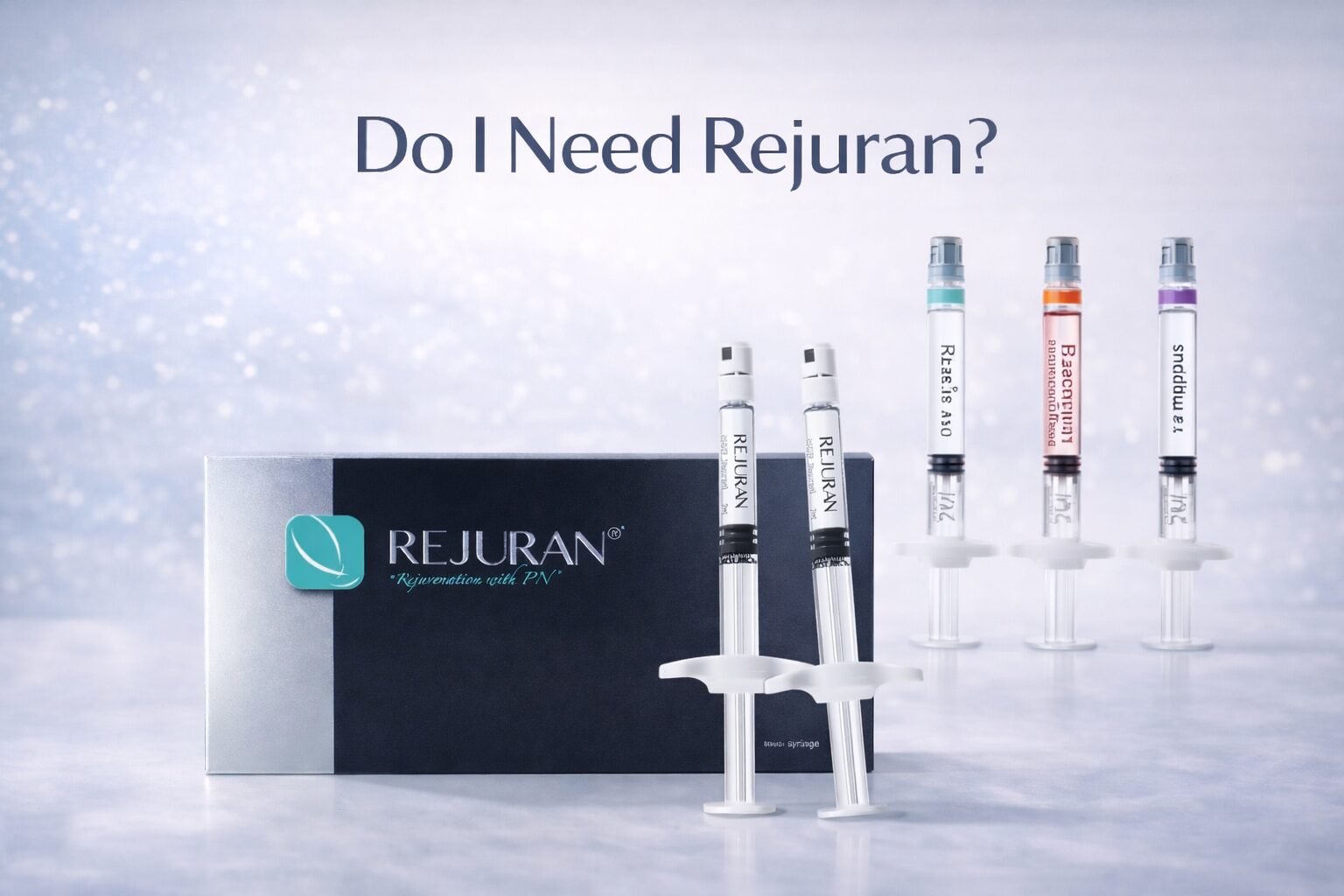
f you’ve ever searched for skin boosters, “salmon DNA,” or even “salmon sperm facial” treatments, you’ve probably come across Rejuran. It’s the name everyone knows – often called Rejuran Healer in clinics.
But here’s the truth: Rejuran isn’t magic. It’s simply polynucleotide (PN) – a DNA fragment that helps repair and regenerate skin – and today, there are many products with the same ingredient, often at higher concentrations and much lower prices.
So before you spend over $250 on one box, let’s look at what you’re really paying for and what your money could do instead.
What Rejuran Actually Is
Rejuran uses salmon-derived polynucleotides (PN) – highly purified DNA fragments that promote collagen production, improve elasticity, and repair damaged skin. The science is solid: PN activates fibroblasts, improves hydration, and enhances overall skin quality over time.
But Rejuran is not the only product using PN. It’s simply the first big brand that got global recognition – and carries a premium price tag because of that name.
The Price Problem
In most markets, Rejuran Healer (also sold as Rejuran TrueSkin) costs about $250–$300 for two 2 mL syringes – and that’s retail. Clinic prices are often far higher once you add their markup and treatment fees.
By comparison, modern PN-based products from Korea with the same or higher concentration usually cost $35–$80 per vial, making them one-third to one-fifth the price for equivalent ingredients.
In other words, you’re paying extra for the name, not the formulation.
The Truth About Rejuran’s PN
Some people believe Rejuran is using more consistently smaller particles that penetrate or work better. This is one of the most persistent marketing myths around Rejuran: that its PN has a “unique molecular size” or “optimized fragment length” that makes it superior. Here’s what’s important:
- Molecular weight range: Rejuran’s PN is typically between 50–1500 kDa, with an average fragment size of ~350 kDa according to manufacturer disclosures and Korean MFDS filings.
- This range is not unique. Most modern PN products (like Oasis PN, Pure Pro, and Jeunetique PN Pro) use fragments in the same size range because the extraction and purification process (enzymatic hydrolysis + filtration) is standardized across the industry.
- There is no published evidence showing that Rejuran’s PN penetrates deeper or performs better due to smaller fragments. Its main difference is branding and original clinical data from 2014–2017 when few competitors existed.
Why the “Dupes” Are Often Better
- Higher concentration: Next-gen formulas often contain more PN or combine it with other ingredients for layered regeneration and effects.
- Added ingredients: Modern formulations include HA, amino acids, glutathione, peptides, or vitamins — which Rejuran lacks.
- Improved delivery: Newer viscosity balances make these products easier to inject, stamp, or use with microneedling.
- Half the price (or less): For the cost of one Rejuran box, you can try two or three top-performing alternatives.
Choosing the Right Alternative
- For an exact dupe of Rejuran Healer (PN only): Oasis PN, Dermagen Cindella Healer, Ami Plus X
Straight PN formulas. Clean, regenerative, and ideal for BAP or meso when you want collagen repair without extra additives. - For PN + Lido: Youthfill PN (2.5% PN), Crystal Healer PN (2.5% PN)
PN is bumped up to 2.5%, plus adds Lidocaine for a pain-free experience. - For PN + HA + Lido: Youthfill PN+ (2% PN), Crystal Healer PN+ (2% PN)
Similar to Rejuran HB but smoother to inject, offering both hydration and deep tissue repair. - For PN + HA + Peptides + other goodies: Jeunetique PN Pro (from Meamo), Illuma PN Pro, Pure Pro (from HJ Corp)
Next-gen blends add peptides, amino acids, and/or antioxidants for faster results and improved texture. - PN 1% for Eyes: Jeunetique Eyes Pro (from Meamo), Ami Eyes, Curenex Eye
Lower viscosity and concentration make these ideal for under-eye meso treatments. - For PN in a vial for microneedling: Revs RMT 140HPN, Soonsu Ultra Reju
Formulated for cosmetic or medical microneedling — spreads easily and delivers that “glass skin” glow. - For PDRN: Curenex Skin Booster, GoldCell+, Kiara Reju, Lusciderm PDRN+
Comparable to Rejuran Elaskin Essence — PDRN promotes cell turnover, hydration, and calm, healed skin.
The Bottom Line
Rejuran deserves credit for pioneering PN therapy — but it’s no longer the gold standard. Today’s market is packed with Korean-made PN and PDRN boosters that deliver equal or better results for a fraction of the cost.
If you’re paying for Rejuran, you’re paying for the brand – not necessarily better skin.
Pro Tip for DIYers
If you’re doing cosmetic microneedling or BAP at home, these newer PN/PDRN formulations are usually easier to work with (less viscous, more compatible with fine needles, and less painful than classic Rejuran). Always use sterile technique, and store unopened vials in a cool, dark place.
How to Use It Best:
PN works best when it’s placed into the dermis – not just on top of it. The easiest method is the BAP technique, which lets the product diffuse evenly through the mid-dermis with minimal trauma. Meso injections are another great option for more targeted delivery. PN can also be used with microneedling, especially at medical depths (> 0.5 mm), but keep in mind that because PN is a large molecule, it doesn’t absorb as deeply through microchannels as smaller peptides or HA serums do. You’ll still get surface-level benefits, just not the full regenerative effect you’d see from proper intradermal placement.
PDRN is a shorter fragment of the same DNA sequence, about 1/10 to 1/20 the molecular size of PN. That smaller structure means it diffuses more easily through the skin barrier and microchannels. It can be effectively used in cosmetic-depth microneedling (0.25–0.5 mm) for wound-healing, redness reduction, and post-treatment recovery. It’s also more anti-inflammatory and soothing, while PN is more structural and rebuilding.
A real pro tip is to BAP your PN then immediately microneedle over it with a PDRN skin booster.
This article reflects independent analysis and interpretation based on publicly available information and scientific literature. It is not affiliated with or endorsed by any of the brands or products mentioned.